
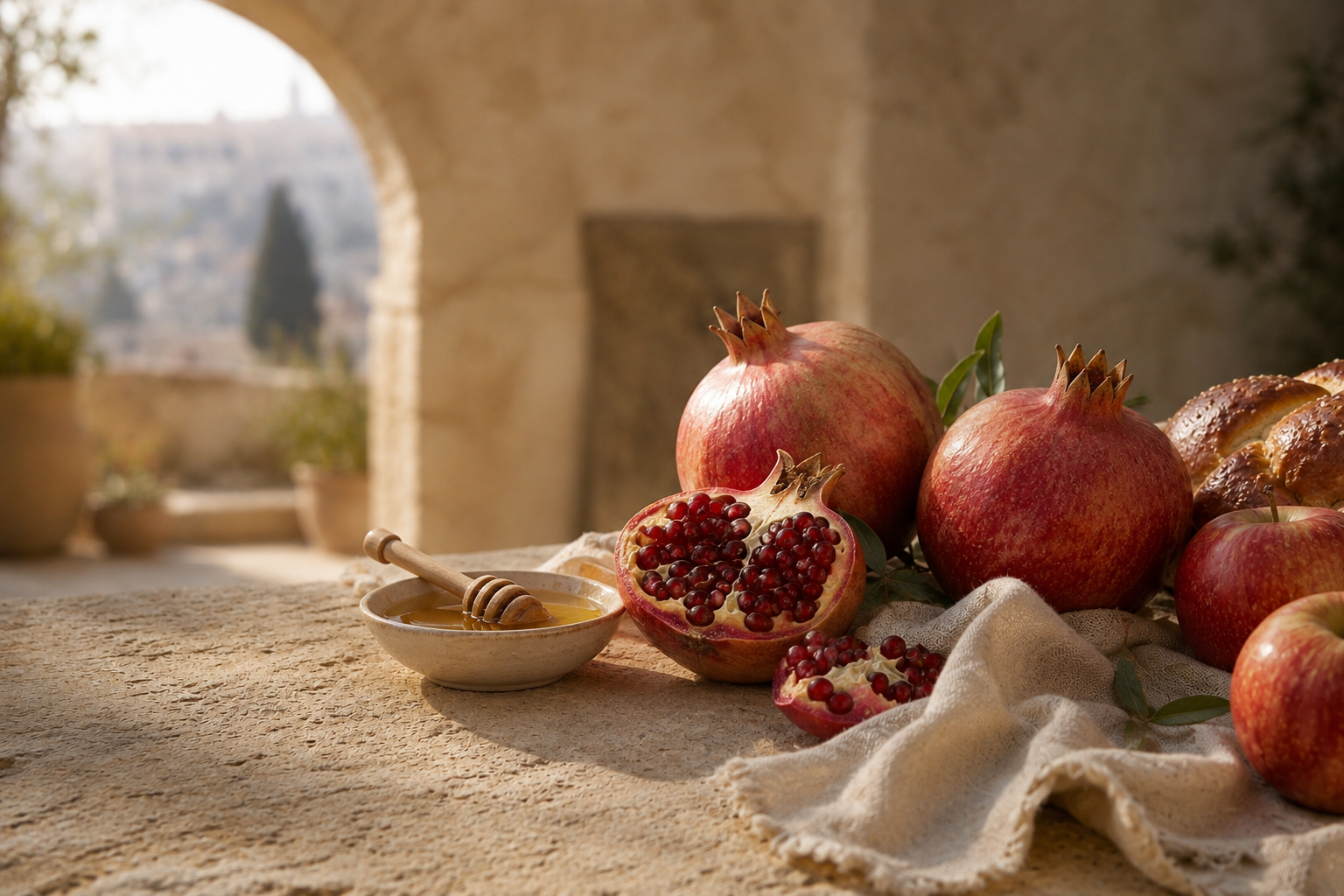
With their jewel-like seeds and deep ruby colour, pomegranates have become one of the most recognizable symbols of Rosh Hashanah—and one of the most enduring images in Jewish art and tradition.
As Rosh Hashanah 2026 begins at sundown on September 11, it is the perfect time to explore why this ancient fruit carries so much meaning—and where travellers can taste, see and bring home its symbolism.
A Symbol of Abundance and Good Deeds
On Rosh Hashanah, many Jewish families eat pomegranates while expressing the hope that their merits and good deeds in the coming year will be as plentiful as the fruit’s seeds. The Talmud also uses the pomegranate as a symbol of spiritual abundance, teaching that even those who may appear “empty” are filled with mitzvot, just as a pomegranate is filled with seeds.
That abundance—hundreds of seeds held inside a single fruit—has made the pomegranate a natural symbol of blessing, possibility and renewal at the start of the Jewish year.
A Fruit Woven Through Jewish History
Pomegranates appear repeatedly throughout the Torah, other books of the Tanakh, and the Talmud. They are one of the Seven Species associated with the Land of Israel, alongside wheat, barley, grapes, figs, olives and dates.
When the Twelve Spies returned after scouting the land of Canaan, pomegranates were among the fruits they carried back. In Exodus, images of pomegranates decorate the hem of the High Priest’s robe. The Song of Songs uses the fruit in its rich imagery of beauty, love and abundance, comparing the beloved’s temples to a split pomegranate and describing an orchard filled with pomegranate trees.
Over time, the fruit’s distinctive form found its way into Jewish architecture, ritual objects, art and jewellery. Even the decorative finials placed on Torah scrolls are known as rimonim—the Hebrew word for pomegranates.
Where Travellers Can Experience the Tradition
For travellers visiting Israel around the High Holidays, the pomegranate is more than a symbol found in ancient texts. It appears in markets, kitchens, orchards and holiday celebrations throughout the country.
At Jerusalem’s historic Mahane Yehuda Market, the season comes alive through overflowing fruit stalls and juice stands serving freshly pressed pomegranate juice. Nearby shops offer Judaica decorated with the familiar motif, from candlesticks and kiddush cups to jewellery and Torah ornaments.
September also coincides with pomegranate season in Israel, making the fruit especially abundant in markets and on holiday tables. Its brilliant red colour, crown-shaped top and tightly packed seeds turn an everyday walk through the market into a vivid connection with centuries of tradition.
Bring the Story to Life
Reading about the symbolism is one thing. Standing in the land where these traditions took root—and tasting the fruit fresh during its harvest season—is another.
Whether you are wandering through Mahane Yehuda, exploring landscapes connected to the Seven Species, or experiencing the atmosphere of the High Holidays, a journey to Israel can bring ancient stories and traditions to life in unforgettable ways.
Speak with your Aufgang Travel advisor to begin planning your journey: Janice Snider at (905) 771 7800 ext. 729