
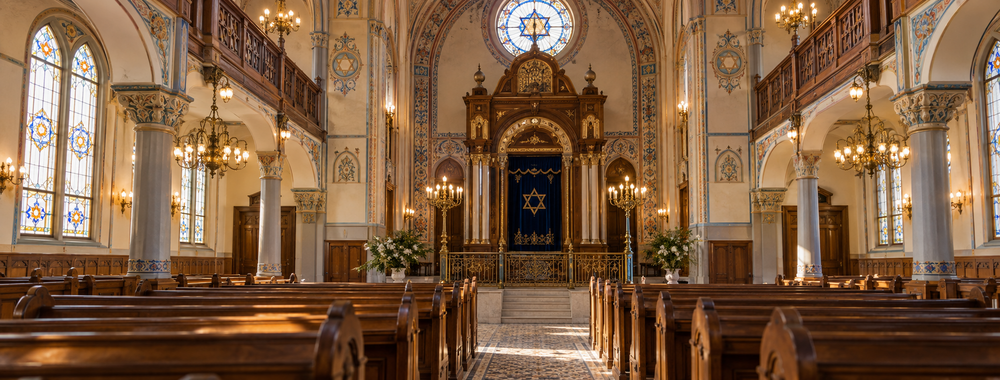
The restored Rakospalota synagogue offers travelers a moving new window into Budapest’s Jewish past, survival and renewal.
A century after it first opened its doors, the historic Rakospalota synagogue in Budapest has returned to its original purpose. For decades, the building was closed to worshippers and used as a warehouse for newspapers and books by Hungary’s National Szechenyi Library. Its reopening and rededication now mark an important chapter in the revival of Jewish life and heritage in the Hungarian capital.
The rededication brought together rabbis, public figures, donors and descendants of the families who helped establish the synagogue. The ceremony began with prayers and the ceremonial entry of a Torah scroll, followed by the unveiling of memorial plaques honouring the building’s founders. More than the restoration of an architectural landmark, the occasion represented the return of a sacred space to the community for which it was built.
A synagogue shaped by its community
The synagogue was built and dedicated in 1926 after years of effort led by Rabbi Michael Mihaly Dushinsky, who served the district for more than four decades. At the time, Rakospalota had a substantial and active Jewish population, and the new synagogue became a centre of religious and communal life.
That life was devastated during the Holocaust. Less than twenty years after the synagogue opened, most of the district’s Jewish community – nearly 8,000 people – was deported to extermination camps. Only about ten percent survived. The restored building therefore carries the memory not only of those who worshipped there, but also of an entire community that was almost destroyed.
From sacred space to sealed warehouse
Under communist rule, the synagogue was stripped of its religious identity and converted into a storage facility for the national library. Its interior filled with books and newspapers, the building remained boarded up and largely cut off from its surroundings for decades. People passed it every day, often unaware of the stories held behind its closed doors.
Returning the property to Jewish use required negotiations to relocate the library’s collection, followed by an extensive renovation completed in less than a year. Philanthropic support, led by benefactor Igor Tulchinsky, helped make the restoration possible. The result is the sixth historic synagogue brought back to active use by Budapest’s Jewish community over the past sixteen years.
A meaningful addition to a Budapest itinerary
Budapest is already one of Europe’s most rewarding cities for Jewish heritage travel. The Dohany Street Synagogue, the Jewish Museum, the Holocaust Memorial Center and the memorials along the Danube tell different parts of a complex story. The reopening of the Rakospalota synagogue adds another perspective: one rooted in a residential district and in the life of a local congregation beyond the best-known tourist sites.
For travelers interested in Jewish history, architecture or family roots, visiting places like Rakospalota can deepen an itinerary. The experience is not simply about seeing a restored building. It is about understanding how Jewish communities grew, how they were shattered, and how their traditions continue to be reclaimed and renewed.
Rakospalota also invites travelers to explore beyond central Budapest. Pairing its story with the grand synagogues and historic streets of the Jewish Quarter creates a more complete view of the city. One part of that journey reveals monumental architecture and well-known landmarks; the other brings visitors closer to neighbourhood memory and living community life.
Planning your Jewish heritage journey
Opening arrangements and visitor access at active houses of worship may change, particularly around holidays and community events. Travelers should confirm details in advance and visit respectfully. An experienced travel advisor can also help coordinate private guides, transportation and meaningful stops that suit personal interests or family history.
Interested in discovering Jewish Budapest as part of a Central European journey?
Speak with your Aufgang Travel advisor to begin planning your journey: Janice Snider at (905) 771 7800 ext. 729